









BEST OF THE DECADE :: Thoughts On Ultimate Spider-Man
Brian Michael Bendis today is the main man over at Marvel these days. The figurehead, along with Joe Quesada, of the direction the company has gone with for the last decadec is this book that was the beginning of the Marvel as we know it today.
The premise of the book was simple: take the core elements of Spider-Man and distill it into the modern day. The idea worked. Ultimate Spider-Man launched to high sales and critical reviews. But it was a different animal than the books coming out at the time. The pacing was different, slower, cinematic in a not widescreen way, but in how it was paced, the story breathed and the original 11 page Spider-Man origin story was now about 192. The first Ultimate Spider-Man trade paperback even more so was a game changer (for good or ill) creating a template of the way stories were paced, writing 4 to 8 part stories “for the trade” as they say.
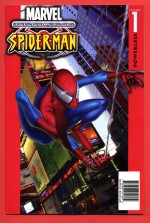
Ultimate Spider-Man is at the end of the day not just the coming of age story that Spider-Man is known as, but the story of a kid messing around in a morally gray adult world–and more often that not being in over his head. More than once Spider-Man dives into or is caught in the middle of a situation he only knows half the story about, and tries to do the right thing. Meanwhile, others berate him for seeing things in terms of right and wrong or for failing to see the moral complexity of a situation. Often adults try to manipulate him or claim him for there own purposes.
In one story Norman Osborn claims since he created the spider that gave Peter his powers that Peter is now his property. Later in the story when Osborn is defeated with Nick Fury’s help Fury says something to the effect that once Peter comes of adult age that he becomes property of the government like all other super-powered persons. Ultimate Spider-Man is a story of keeping a good moral compass in a modern world of the military industrial complex that pushes apathy and control as inevitabilities of adulthood.
Ultimate Spider-Man is also notable for its consistency. Every issue has been written by Bendis and he has almost exclusivity with the character that Stan Lee had with the Silver Surfer for years. The first 110 issues were drawn by workhorse artist Mark Bagley who was turning out issues so fast that the book was often bi-weekly. Stuart Immonen drew the next 20 issues in a similar timely fashion before the book’s first volume drew to a close recently. Annuals were drawn by the fabulous Mark Brooks and David LaFuente who is the current artist on the book’s recently launched second volume.
Really this book might really fit more in a “Most Important of the Decade” thing for the standards that it set. Best of the Decade is things like Asterios Polyp and All Star Superman and DC The New Frontier and Bottomless Belly Button. Those are finite works as most everything in these write-ups will be, but there’s room for at least one continuing series here and for the fact that the series remains so consistent in quality, because it has so much personality, because it’s such an obviously personal piece of work to its writer, I think “Best” will work too.







I couldn’t disagree more.
This book is and always was nothing more than a very pale shadow of the original The Amazing Spider-Man, whether drawn by Ditko or Romita.
Marvel’s entire “Ultimate” line was an egregious directors-style rehashing of classic story material, produced by better creators and cast as more hip, more modern, more with it version for the masses … and then slickly packaged for willing dupes who really ought to know better.
I do give big props to Bendis and Bagley for a phenomenal run on an admittedly successful book, and absolutely do not begrudge anyone from appreciating Ultimate Spider-Man, but I do take exception to latter-day rehashing which shamefacedly casts itself as something else entirely.
It’s funny, Daniel, but from a different perspective I would almost agree wholeheartedly with you, but only as a sad indictment of what most mainstream comics have become.
Hm very interesting, let’s you and him fight! I think I agree with both of you–while I’m not the biggest fan of Ultimate Spider-Man in the world, I like it for what it is, and would agree with Daniel that it was very important in terms of shaping some of Marvel’s publishing ideas, as well as being Bendis’ and Quesada’s big victory. I remember when Quesada started being kind of blown away by the editorial direction–remember Bruce Jones’ run on Hulk, Grant Morrison on X-Men, Straczynski on Spider-Man? The focus switched from strong artists to strong writers, which I think was a strong and influential editorial choice for the overall health of what was then still a kind of beat-up industry.
BUT I also agree with Chuck that there is a lot of space for new stories without retelling old ones, which I think was always the limitation of the Ultimate Universe. At the end of the day, it’s just the B-team, the second tries at something that worked just fine the first time, so it’s hard to carry real drama over the long haul. But this is just my opinion.